- Honorary Member
- SSC Gold Medalist
- Pierre-Robillard Award
- CRM-SSC Prize in Statistics
- The Canadian Journal of Statistics Award
- Lise Manchester Award
- SSC Impact Award
Honorary Member
SSC Honorary membership awarded to Dr Ivan P. Fellegi
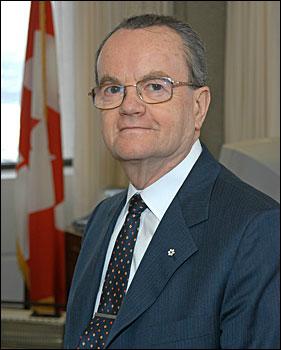
The Statistical Society of Canada today announced that Dr Ivan P. Fellegi, the Chief Statistician of Canada, has been named as an Honorary Member. Honorary Membership of the SSC is awarded to a statistical scientist of outstanding distinction who has contributed to the development of the statistical sciences in Canada. The formal announcement of this award was made in Ottawa by SSC President Christian Genest on the opening day of the 2008 SSC Annual Meeting.
Dr. Fellegi joined Statistics Canada, then the Dominion Bureau of Statistics, in 1957 shortly after his arrival in Canada. He was appointed as Chief Statistician of Canada in 1985. Statistics Canada has been recognized as the top statistical office in the world and this recognition is largely due to Dr Fellegi's leadership. He has always emphasized the importance of sound methodology and integrity from his staff. He has contributed greatly to the development and advancement of statistics in Canada, as leader of the national statistical agency, a promoter of research, and supporter of collaboration with statisticians in universities.
Dr Fellegi's outstanding research contributions include work on design of multi-stage rotating panel surveys, response variance, automatic editing and imputation, record linkage, and statistical confidentiality. Two of his papers, on the theory of record linkage and on a systematic approach to automatic edit and imputation, are listed among 19 landmark papers in survey statistics by the International Association of Survey Statisticians. Dr Fellegi has been honoured in many ways, including five honorary doctorates. He is an Officer of the Order of Canada, a Member of the Hungarian Academy of Sciences, and a Gold Medalist of the Statistical Society of Canada. He served as President of the Statistical Society of Canada, the International Statistical Institute, and the International Association of Survey Statisticians.
The citation reads: "To Dr Ivan Fellegi, for fundamental contributions to the management of statistical organizations and their relevance to public policy, for development of innovative statistical methods, for international leadership in the advancement of statistics and for his long service to the statistical profession."
SSC Gold Medalist
SSC Gold Medal awarded to Professor Luc Devroye

The Statistical Society of Canada (SSC) today announced that Professor Luc Devroye has been awarded the 2008 SSC Gold Medal. The Gold Medal is the highest award of the SSC and is awarded to a person who has made substantial contributions to statistics or probability, either in mathematical development or in applied work. The Gold Medal is intended to honor outstanding current leaders in their fields. The formal announcement of this award was made by SSC President Christian Genest at the SSC Annual Meeting held in Ottawa.
Born in Belgium, Luc Devroye studied at the Katholieke Universiteit te Leuven, at Osaka University and at the University of Texas in Austin, where he received his Ph.D. in 1976 under the supervision of Professor Terry Wagner. He joined the School of Computer Science at McGill University in Montréal in 1977 and has remained there ever since, becoming a Full Professor in 1987 and a James McGill Professor in 2003.
Professor Devroye's research interests are quite wide. His Ph.D. was in the area of non-parametric statistics and density estimation, an area in which he has been very active and influential publishing five books. His work has led to a comprehensive theory of nonparametric density estimation, and to distribution-free approaches to pattern recognition. Another area of major interest for Professor Devroye has been random number generation. He is the author of the highly successful book "Non-Uniform Random Variate Generation." Published in 1986, this book is one of the most comprehensive accounts of algorithms and general methodologies for generating random variables with specified distributions. In recent years this topic has become increasingly important in view of the increased interest in computational and simulation based approaches to inference, particularly in the area of Bayesian statistics. Other research interests include the probabilistic analysis of algorithms as well as the study of random trees, graphs, and other complex data structures.
In his career Professor Devroye has received many prestigious awards including an E.W.R. Steacie Memorial Fellowship (1987), a Humboldt Research Award (2004), and the Killam Prize (2005). He has supervised students from every continent but Australia and hopes that one day all students from all countries will have access to excellent free education.
The Gold Medal award citation reads: "To Luc Devroye, for outstanding research contributions in the fields of random number generation, density estimation, pattern recognition, and the analysis of algorithms and data structures."
Pierre-Robillard Award
SSC Pierre-Robillard Award awarded to Juli Atherton and Jingjing Wu

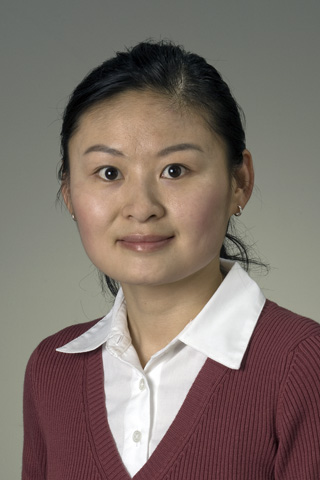
The Pierre Robillard Award is awarded each year by the Statistical Society of Canada (SSC) to the author of the best doctoral thesis in probability or statistics defended at a Canadian university. In 2007, there are exceptionally two winners: Drs Juli Atherton and Jingjing Wu.
Dr Atherton's thesis is entitled “Bayesian optimal design for changepoint problems.” It was completed at McGill University under the joint supervision of Professors David B. Wolfson and Alain C. Vandal. Dr Atherton's thesis concerns optimal designs for changepoint problems where there is a possible change in mean at an unknown location. Through the introduction of a design measure, different in structure but similar in spirit to that of Kiefer, very general optimal design results were obtained to estimate the before- and after-change means and to test for a change. Dr Atherton is currently extending these results to other changepoint and latent variable models.
Dr Wu's thesis is entitled “Minimum Hellinger Distance estimation in semiparametric models.” It was completed at the University of Alberta under the supervision of Professor Rohana J. Karunamuni. Dr Wu's thesis investigates minimum Hellinger distance (MHD) estimators in various semiparametric models. It is known that MHD estimators achieve efficiency at the model density and that they have desirable robustness properties in fully parametric models. Dr Wu's results extend the use of the MHD approach to semiparametric models, where it yields robust and efficient estimators.
After completing an M.Sc. in Physical Oceanography at the Massachusetts Institute of Technology, Dr Atherton moved to Montréal in 2002 to begin graduate studies in statistics at McGill University. She received her Ph.D. in 2007. She is currently a postdoctoral researcher with Professors Peter Bickel and Haiyan Huang at the University of California at Berkeley, where she has been collaborating on the Berkeley Drosophila Transcription Network Project. Later this year she will come back to Montréal to take up a position as an Assistant Professor in the Department of Epidemiology, Biostatistics and Occupational Health at McGill University.
Dr Wu completed her B.Sc. and M.Sc. in China, at the Central University for Nationalities (1999) and at the Beijing Normal University (2002). She then came to Canada to study at the University of Alberta and received her Ph.D. in 2007. She is now an Assistant Professor at the Department of Mathematics and Statistics, University of Calgary.
CRM-SSC Prize in Statistics
CRM-SSC Prize in Statistics awarded to Paul Gustafson

Paul Gustafson, Professor in the Department of Statistics at the University of British Columbia (UBC), is the 2008 winner of the CRM-SSC Prize. His contributions to Bayesian statistical methodology and its application to epidemiology have had an immense impact in statistics, biostatistics and public health.
Within 15 years of his Ph.D., Paul has made outstanding contributions to the understanding of Bayesian statistical inference, to the implementation of the Bayesian paradigm in the health sciences, and to the development of computational algorithms for Bayesian inference. His work displays a deep knowledge of the foundation of statistical reasoning and a true ability to make substantial contributions to diverse domains of application. He has written key papers in several areas of statistics such as survival analysis, the analysis of count data, computational methods, and disease mapping. He has made solid methodological contributions through his collaborative work with epidemiologists, medical researchers, and psychologists.
Paul obtained his B.Sc. in Mathematics in 1990 and his M Sc. in Statistics in 1991 from the University of British Columbia. He completed his Ph.D. in 1994 at Carnegie-Mellon University. He shared Canadian bonds with his supervisor Larry Wasserman, the 2002 recipient of the CRM-SSC award. Paul is a third generation SSC-CRM winner since Larry Wasserman' adviser, Rob Tibshirani, was the 1999 recipient of this award. He held a Postdoctoral fellowship at the University of British Columbia in 1994, where he was appointed Assistant Professor in 1995, Associate Professor in 2000 and Full Professor in 2005. In 2001, he obtained a UBC Killam Faculty Research Fellowship. He is grateful to his colleagues and students at UBC for a stimulating and collegial academic environment.
Paul holds research grants from the Natural Sciences and Engineering Research Council (NSERC), the Canadian Institutes for Health Research (CIHR), the National Program for Complex Data Structure (NPCDS), and the Social Sciences and Humanities Research Council. These grants are a tribute to his research and show the breadth of his scientific activities. In 2007, he was one of the first recipients of the Discovery Accelerator Supplement of NSERC, a special research grant for outstanding researchers who show strong potential to become international leaders in their field.
Paul Gustafson is a leading international expert in Bayesian analysis. His 2004 book entitled “Measurement Error and Misclassification in Statistics and Epidemiology: Impacts and Bayesian Adjustments,” published by Chapman and Hall, was well received. It documents the impact of measurement error in explanatory variables and details Bayesian adjustment methods for both continuous and categorical variables. It uses modern Markov Chain Monte Carlo techniques to implement the proposed methodology.
In a provocative 2005 discussion paper in Statistical Science, Paul questions the conventional wisdom that a Bayesian model with parameters that cannot be identified from the data should be simplified. Surprisingly, he argues that it may be more appropriate to expand the model. Even more astonishingly, he establishes an asymptotic theory for the identifiable parameters in non-identifiable models.
Paul has served on selection committees for CIHR, NSERC, and NPCDS. He has been an Associate Editor for The Canadian Journal of Statistics (CJS), the Journal of Statistical Planning and Inference, Lifetime Data Analysis, and Statistics in Medecine. In 2007 he became Editor-in-Chief of the CJS. He has also served as President of the Biostatistics Section of the Statistical Society of Canada. In addition, he made important contributions to the training of highly qualified personnel; he has supervised 2 postdoctoral fellows, 3 Ph.D.'s and 13 Master's degrees. Paul Gustafson's impact on statistics has been truly inspiring.
Paul has four siblings; two are lawyers and his brother Stephen is a mathematics faculty at UBC. He is married to Reka, a public health physician in Vancouver, who is extremely supportive of his research endeavours. She deserves credits for thoughts and advice about the applied side of epidemiology and health research more generally. Paul and Rika have three children, Joseph, Lucas, and Anna. Their hobbies include skiing, soccer, and tennis.
Paul Gustafson is the tenth recipient of the CRM-SSC Prize. Previous winners of the award were Christian Genest (Laval), Robert J. Tibshirani (Stanford), Colleen D. Cutler (Waterloo), Larry A. Wasserman (Carnegie-Mellon), Charmaine B. Dean (Simon Fraser), Randy Sitter (Simon Fraser), Jiahua Chen (Waterloo), Jeffrey S. Rosenthal (Toronto), and Richard J. Cook (Waterloo).
The Canadian Journal of Statistics Award
The Canadian Journal of Statistics Award awarded to Hwashin Hyun Shin, Glen Takahara and Duncan J. Murdoch


The Canadian Journal of Statistics (CJS) Award is presented each year by the Statistical Society of Canada (SSC) to the authors of a contribution to the journal in recognition of the outstanding quality of the paper's methodological innovation and presentation.
The paper entitled “Optimal designs for calibration of orientations” (vol. 35, no 3, pp. 365-380) is the winner of the 2007 CJS Best Paper Award. The award will be presented to the authors, Hwashin Hyun Shin, Glen Takahara and Duncan J. Murdoch, at the SSC Annual Meeting to be held in Ottawa, May 25-29, 2008.
Orientations describe rotations of three-dimensional objects. These are used in virtual reality systems in connection with 3D animation, and in motion-tracking devices studying human motion. In order to calibrate these tools, a statistical model must be used. The winning article discusses efficient ways of conducting experiments to estimate the parameters in such models. This work was motivated by a study of how to reduce back pain in industrial workers.
Dr Shin is a research scientist at Health Canada. Dr Takahara is an Associate Professor in the Department of Mathematics and Statistics at Queen's University, and Dr Murdoch is an Associate Professor in the Department of Statistical and Actuarial Sciences at the University of Western Ontario.
Lise Manchester Award
SSC Lise Manchester Award awarded to Professor Stephen Fienberg
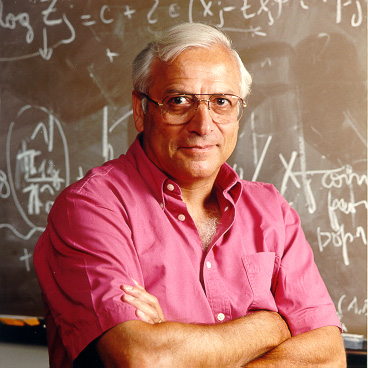
The Statistical Society of Canada (SSC) today announced that Professor Stephen Fienberg has been named the first recipient of the Lise Manchester Award. This biennieal award is to commemorate the late Dr Lise Manchester's abiding interest in making use of statistical methods to provide insights into matters of relevance to society at large. This new award recognizes excellence in 'state of the art' statistical research which considers problems of public interest and which is potentially useful for formation of Canadian public policy.
Stephen Fienberg received this award for his 2006 paper "Privacy and Confidentiality in an e-Commerce World: Data Mining, Data Warehousing, Matching and Disclosure Limitation" published in the journal Statistical Science Vol. 21 No. 2, pp 143-154. This paper deals with the growing concerns regarding loss of privacy associated with the rapidly growing availability of online databases containing personal information. This issue poses many challenges for statistical methodology. Stephen Fienberg's work explores how such activities can take place without compromising pledges of confidentiality for individual databases. As such, it is likely to have a major impact into how large online databases are maintained and analyzed in the future.
Stephen Fienberg is originally from Toronto and did his undergraduate training at the University of Toronto before going to Harvard University where he received his Ph.D. in 1968. He is currently the Maurice Faulk University Professor of Statistics and Social Science at Carnegie Mellon University, with appointments in the Department of Statistics, the Machine Learning Department, and Cylab. He has served as Dean of the College of Humanities and Social Sciences at Carnegie Mellon and as Vice President for Academic Affairs at York University, as well as on the faculties of the University of Chicago and the University of Minnesota. He is a member of the U. S. National Academy of Sciences, a fellow of the Royal Society of Canada, and a fellow of the American Academy of Political and Social Science. He is also a fellow of the American Association for the Advancement of Science, the American Statistical Association, and the Institute of Mathematical Statistics. He was the 1982 recipient of the Committee of Presidents of Statistical Societies Presidents' award as the Outstanding Statistician under the age of 40, and the 2002 recipient of the Samuel S. Wilks Award of the American Statistical Association recognizing his distinguished career in statistics.
SSC Impact Award
SSC Impact Award awarded to Professor Stephen Walter

The Statistical Society of Canada (SSC) today announced that the first recipient of the SSC Award for Impact of Applied and Collaborative Work is Professor Stephen Walter. This award recognizes outstanding contributions by SSC members in collaborative research and applied work. The award is intended for contributions that have made relatively recent impact on an organization or a subject area that is not cognate with the statistical sciences.
Stephen Walter received his Ph.D. from the University of Edinburgh, Scotland, under the supervision of Professor D. J. Finney in 1972. After faculty appointments at the University of Ottawa (3 years) and Yale University School of Public Health (7 years), he joined the Department of Clinical Epidemiology and Biostatistics at McMaster University, where he is now a Professor.
Dr Walter collaborates with clinicians in internal medicine, evidence-based medicine, and developmental pediatrics, and with epidemiologists working in environmental health, cancer etiology and screening. He is interested in several areas of biostatistical methodology, including: risk assessment and communication; evaluation of diagnostic and screening data; regional and temporal variation in health; and design and analysis of medical research studies. Collaborative work with clinicians and other scientists has always been a hallmark of Dr Walter's research. As well as groups in Canada, Dr Walter has collaborated with researchers in India, Australia and Finland among others. He has also been highly influential in working with international bodies such as the World Health Organization dealing with global health issues. One area in which his impact has been widely felt is in screening for disease. His recent reports on screening for cervical cancer are one of the most important clinical and public health developments at present, particularly in developing countries.
The award citation reads: "To Stephen Walter, in recognition of the national and international impact on the clinical and health sciences of his work in screening and diagnostic testing."