- Honorary Member
- SSC Gold Medalist
- Distinguished Service Award
- Pierre-Robillard Award
- CRM-SSC Prize in Statistics
- The Canadian Journal of Statistics Award
- SSC Impact Award
Honorary Member
SSC Honorary Membership awarded to George Styan

The Statistical Society of Canada (SSC) today announced that George P.H. Styan has been named an Honorary Member. Honorary Membership of the SSC is awarded to a statistical scientist of outstanding distinction who has contributed to the development of the statistical sciences in Canada.
Professor Styan received a B.Sc. degree in mathematics from the University of Birmingham in 1959, and an M.A. in 1964 and a Ph.D. in 1969, both in mathematical statistics and both from Columbia University. He was then appointed Assistant Professor and, in 1987, promoted to Professor of Mathematics and Statistics at McGill University. His research focuses on statistics at the interface of linear algebra and its broad spectrum of applications.
Professor Styan has contributed substantially and selflessly to the statistics profession through exemplary service to very many editorial boards and to conference organization, including over ten years as Abstracting Editor for Current Index to Statistics and seventeen years at the helm of the managing editorship for The Canadian Journal of Statistics. His eagle-eyed supervision of the publishing process for The Canadian Journal of Statistics was a critical element of the impeccable quality of its print, contents, reprints, and journal services.
Professor Styan has received numerous awards, including the SSC Distinguished Service Award in 1988 and an Honorary Doctor of Philosophy degree from the University of Tampere in Finland in 2000. Professor Styan received the 2003 Harry C. Carver Medal from the Institute for Mathematical Statistics, in part "for exemplary service through membership on organizing committees for many international meetings and for elevating the taste of the statistical community with élan and savoir faire as a gourmet par excellence".
The award citation reads:
To George Styan, for his deep research at the interface of Matrix Theory and Statistics; for his remarkable editorial work within Canada and beyond, his mentoring of graduate and postdoctoral students; and for innumerable other scholarly and professional contributions to the international statistical community.
Posthumous Honorary Member
SSC Honorary Membership awarded to Isobel Loutit
The Statistical Society of Canada (SSC) today announced that Isobel Loutit has been awarded Honorary Membership. An Honorary member is a statistical scientist of outstanding distinction who has contributed to the development of the statistical sciences in Canada.
Isobel Loutit received a B.A. in 1928 from the University of Manitoba, one of four women who graduated in mathematics that year. She was a school teacher 1929 to 1942, and Assistant Principal for five years. She then responded to a government advertisement for industrial positions for women with degrees in mathematics and science and became involved in testing equipment and material for the war effort. She was recruited by Northern Electric Company, now Nortel, because of her technical expertise in mathematics, engineering, statistics and quality control. At a time when these sorts of careers were not open to women, she was able to excel in the industrial position she held and remained employed at Northern Electric Company from 1943 to her retirement in 1972. She participated in several professional development courses throughout her career, interacting with giants of quality control including W. Edwards Deming and Walter Shewhart. She became an active participant in the Association for Quality Control, both in Canada and the United States, and served as President of the Montreal Chapter of the American Society for Quality. Upon retirement in Montreal, she became very active in the compilation of the history of First Baptist Church in Montreal and in spearheading the compilation of a history of the Scots in the Eastern Townships.
Isobel Loutit passed away in April, 2009, only a few months before her 100th birthday.
See
"Isobel Loutit: A Statistician of Quality"
by David Bellhouse.
The award citation reads:
To Isobel Loutit, one of the first women to work professionally as a statistician and scientist in Canada, for her pioneering work in quality improvement and statistical analysis; and for her dedication to teaching mathematics and statistics.
SSC Gold Medalist
SSC Gold Medal awarded to Nancy Reid

The Statistical Society of Canada today announced that Professor Nancy Reid has been awarded the Gold Medal of the Society. The Gold Medal is awarded to a person who has made substantial contributions to statistics or probability, either to mathematical developments or in applied work. The Gold Medal honors outstanding current leaders in their fields.
Professor Reid is University Professor and Canada Research Chair in Statistical Theory and Applications in the Department of Statistics at the University of Toronto. She received a B.Math. from the University of Waterloo, an M.Sc. from the University of British Columbia and a Ph.D. from Stanford University. She followed this with a NATO postdoctoral fellowship at Imperial College and an Assistant Professorship at the University of British Columbia, where she stayed for five years before moving to the University of Toronto. In 1988, she was appointed Professor, in 2003, University Professor, and in 2007, Canada Research Chair, at the University of Toronto.
Professor Reid is a Fellow of the American Statistical Association, the Institute of Mathematical Statistics, the American Association for the Advancement of Science, the Fields Institute, and the Royal Society of Canada. She holds an impressive list of awards including the Emanuel and Carol Parzen Prize for Statistical Innovation, the President's Award of the Committee of Presidents of Statistical Societies and the Canadian Mathematics Society's Krieger-Nelson Prize Lectureship.
Nancy Reid has made outstanding contributions to the mathematical theory of statistics. She has worked on difficult areas in the foundations of statistical argument and inference, and some of her work impinges on the very core of the scientific method itself. Professor Reid is widely recognized as one of the leading theoretical statisticians internationally and is well known for her work on higher order asymptotics, profile likelihood methods, notions of parameter orthogonality to develop and extend conditional inference (leading to the .Cox-Reid likelihood.), nonparametric statistics, influence functions, and an important series of papers in the last few years on Bayesian and frequentist methods. Widely sought as a speaker at international conferences and the recipient of several named lectureships, Professor Reid has an extraordinary ability to write and lecture on difficult areas of theoretical statistics with valuable insight and overview.
Professor Reid is an inspirational leader in the development of the statistical sciences in Canada and internationally. She has served the SSC as President, as Editor of the Canadian Journal of Statistics, and on very many advisory panels in the U.S. and Canada. She has played a pivotal role in the evolution and growth of the statistical discipline in Canada and in mentoring young researchers in statistics.
The award citation reads:
To Nancy Margaret Reid, for fundamental contributions to statistical inference, particularly in small sample approximations for likelihood-based inference, the role of model geometry and the synthesis of frequentist and Bayesian methods; for the development and elucidation of methods of scientific importance; and for the impact of her leadership on the advancement of statistical sciences research in Canada.
Distinguished Service Award
Distinguished Service Award: Christian Léger

The Statistical Society of Canada announced today that Professor Christian Léger has been awarded the 2009 SSC Distinguished Service Award. This award is given to a member of the SSC who has made substantial contributions to the running or welfare of the Society over a period of several years.
Professor Léger obtained a B.Sc. from McGill University and a Ph.D. from Stanford University. He then joined the Université de Montréal, where he has been Professor since 1998. At the Université de Montréal he has served in many capacities including the major leadership roles of Deputy and Interim Director of the Centre de recherches mathématiques. He received an excellence in teaching award from the Université de Montréal in 2000.
Over many years, Professor Léger has provided influential direction for the SSC. From the very start of his career he was immediately involved in several SSC committees, and more recently he has held the major roles of Executive Secretary, Program Secretary, member of the SSC-NSERC Liaison committee, Associate Editor of the Canadian Journal of Statistics, Chair of the Research and Bilingualism committees, Chair of Local Arrangements for SSC 2004, and Program Chair of SSC 2010, the annual meetings of our society. Indeed, Professor Léger has touched on every major aspect of operation of the SSC and has become over the years one of the foundational pillars of our society. Professor Léger has also served the statistical community in Canada and internationally on the NSERC Statistical Sciences grant selection committee, as Chair of the Board of Directors of the National Program for Complex Data Structures, member of the scientific committee of the Banff International Research Station, member of the Statistics Canada's Advisory Committee, and member of the Board of Directors of the MITACS Network of Centres of Excellence. His leadership is marked by high energy, creativity and initiative, by rigour, thoroughness and care, and by great devotion to the SSC and to statistical sciences in Canada.
The award citation reads:
To Christian Léger, for long and outstanding service to the SSC and to the statistical community of Canada and Québec, in particular through the numerous leadership positions that he has held at the SSC, including secretary, program secretary, member of the SSC-NSERC Liaison Committee, and associate editor of the Canadian Journal of Statistics; for his dedicated work on the NSERC grant selection committee and the Statistics Canada Advisory Committee on Statistical Methods; for his involvement in the National Program on Complex Data Structures; and for his leadership in the establishment and direction of the Statistical Laboratory of the Centre de recherches mathématiques.
Pierre-Robillard Award
Pierre-Robillard Award: Baojiang Chen
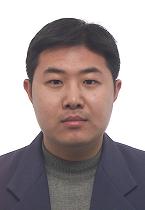
The Pierre Robillard Award for the best PhD thesis in the areas of probability and statistics defended in Canada in 2008 has been awarded to Dr. Baojiang Chen.
Dr. Chen's thesis is entitled "Statistical Methods for Multi-State Analysis of Incomplete Longitudinal Data" and was completed at the University of Waterloo under the supervision of Professors Richard Cook and Grace Yi. Longitudinal studies often feature incomplete data and irregularly spaced observation times. Dr. Chen considered a variety of problems involving the analysis of incomplete longitudinal categorical data. These include likelihood methods based on joint models for serial categorical data, augmented inverse probability weighted estimating equations for semiparametric analyses of incomplete response and covariate data, and joint models for response and observation processes for assessments of patients with progressive disease processes when informative missing data occur. Areas of research motivating these developments include smoking prevention studies, disease dynamics in cancer patients, and longitudinal studies of patients with rheumatic diseases.
Dr. Chen received his B.Sc. and M.Sc. degrees from Nankai University in China in 2002 and 2005, respectively. Afterwards, he moved to the University of Waterloo where he received his Ph.D. in 2008. Presently, Dr. Chen is a Postdoctoral Fellow in the Department of Biostatistics at University of Washington in Seattle.
CRM-SSC Prize in Statistics
CRM-SSC Prize in Statistics awarded to Hugh A. Chipman

Hugh Chipman, Professor in the Department of Mathematics and Statistics at Acadia University, is the 2009 winner of the CRM-SSC Prize. His contributions to computational data analysis and especially to non parametric Bayesian modeling have had an important impact in statistics and bioinformatics.
Within 15 years of his Ph.D., Hugh has made outstanding contributions to the application of Bayesian statistical inference for data analysis. His work on Bayesian variable selection in experimental design, on a Bayesian paradigm for nonparametric wavelet regression, and on a Bayesian approach to CART (Classification and Regression Tree) modeling is seminal. His papers are widely cited and have a profound impact on the development of computer intensive non parametric data analysis. In 2006 his work was selected for a full oral presentation at the Neural Information and Processing Systems (NIPS) meeting.
Hugh obtained his B.Sc. in Mathematics in 1990 at Acadia University; he then went to the University of Waterloo where he obtained his M.Sc. in 1991 and his Ph.D. in 1994, both in Statistics. His Ph.D. thesis was written under the supervision of C. F. J. Wu and M. S. Hamada. He was then appointed in the Graduate School of Business of the University of Chicago as an assistant professor. He stayed in Chicago for three years and came back to Canada, at the University of Waterloo in 1997. He spent seven years in Waterloo, as an assistant and an associate professor. In 2004 he obtained a Tier II Canada Research Chair in Mathematical Modeling at the University of Acadia where he was promoted a full professor in 2006. In 2002 he went to Stanford University as a visiting associate professor.
Hugh holds research grants from the Natural Sciences and Engineering Research Council (NSERC), MITACS (Mathematics of Information Technology and Complex Systems), NICDS (National Institute for Complex Data Structure), and CFI (Canada Foundation for Innovation). These grants are a tribute to his excellence in research and show the breadth of his scientific activities.
Hugh has one brother who owns an information technology consulting business in Halifax. He is married to Tania, who keeps him grounded in reality. They have two sons, Max and Jack, whose hobbies include music, outdoor activities, and lego. Hugh and his family are lucky to live in the beautiful Annapolis Valley area of Nova Scotia, close to parents on both sides. Hugh's father, Fred, is a retired professor of Mathematics at Acadia University. Hugh did manage to take one undergraduate course from his father (he passed the course).
The development of the Bayesian approach to CART modeling is one of Hugh’s major accomplishments; it influenced the exploding area of Bayesian nonparametrics. This was particularly notable as he took the original recursive partitioning CART approach, which was primarily an exploratory data analytic tool, extended it to be a model, developed general prior distributions for the space of all CART models, and then implemented an MCMC (Markov Chain Monte Carlo) approach for posterior computation and exploration. This was followed by important contributions such as Bayesian tree modeling and Bayesian Adaptive Regression Trees, a Bayesian ensemble learning approach that has proved to be remarkably powerful for finding low dimensional structure in high dimensional data.
Hugh has served on the NSERC selection committee in statistics. He has been an Associate Editor for the Canadian Journal of Statistics, Technometrics, and Statistics and Computing. He has refereed papers in numerous scientific journals. Statistica Sinica has recognized the quality of his editorial work by giving him an award for quality and timely referee reports. He has been a member of several international scientific advisory boards such as ACEnet, the Exploratory Centre for Chemoinformatics Research (North Carolina State University), and Genome Canada Artic project. In addition, he made important contributions to the training of highly qualified personnel; he has supervised 3 postdoctoral fellows, 4 Ph.D.’s and 10 Master’s students. Hugh Chipman has advanced the statistical sciences in a broad range of areas by providing novel modelling methods. His work will have a large impact on the development of statistical methodology and its applications for many years.
Hugh Chipman is the eleventh recipient of the CRM-SSC Prize. Previous winners of the award were Christian Genest (Laval), Robert J. Tibshirani (Stanford), Colleen D. Cutler (Waterloo), Larry A. Wasserman (Carnegie-Mellon), Charmaine B. Dean (Simon Fraser), Randy Sitter (Simon Fraser), Jiahua Chen (Waterloo), Jeffrey S. Rosenthal (Toronto), Richard J. Cook (Waterloo), and Paul Gustafson (UBC).
The award citation reads:
For outstanding contributions to non parametric Bayesian statistical inference and non parametric wavelet regression, for his extension of statistical techniques based on Classification and Regression Trees and his innovations in discriminant and cluster analysis, for interdisciplinary research in bioinformatics and machine learning, as well as for the training of graduate students.
The Canadian Journal of Statistics Award
The Canadian Journal of Statistics Award: Qing Pan and Doug Schaubel
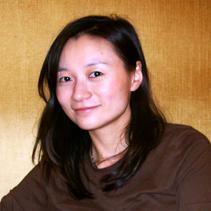

The Statistical Society of Canada is pleased to award Qing Pan and Doug Schaubel the Canadian Journal of Statistics Award for the best paper published in the journal in 2008. The papers are judged according to excellence, innovation and presentation.
The paper, titled "Proportional hazards models based on biased samples and estimated selection probabilities," was published in Vol. 36, No. 1, 2008, pp. 111-127.
Unrepresentative samples are common in observational studies and often lead to biased parameter estimates. The authors propose a two-stage inverse-probability-of-selection weighted proportional hazards model, using weights estimated from auxiliary information on the sampling process. The estimation of the weights is explicitly incorporated into the inference procedures, which leads to gains in efficiency relative to existing methods that treat the weights as fixed. The method is widely applicable from epidemiologic to ecological studies. Through the proposed methods, Pan and Schaubel demonstrate that the increased failure risk associated with expanded criteria on donor kidneys is greatly underestimated by previous analyses which did not account for the inherent bias introduced by the acceptance/discard process.
Dr. Pan is an Assistant Professor in the Department of Statistics at George Washington University. A winner of ENAR's 2008 Distinguished Student Paper Award, her research interests center on survival analysis, recurrent event data, as well as their applications in observational studies, clinical trials and equal employment cases. She obtained her Ph.D. from University of Michigan. An Associate Professor in the Department of Biostatistics at the University of Michigan, Dr. Schaubel's research interests include multivariate survival analysis, recurrent event data, dependent censoring, and epidemiologic studies. He holds B.Sc., M.Sc. and Ph.D. degrees from University of Waterloo, McGill University and University of North Carolina, respectively.
SSC Impact Award
SSC Impact Award: Rick Routledge

The Statistical Society of Canada (SSC) today announced that the recipient of the SSC Award for Impact of Applied and Collaborative Work is Professor Rick Routledge of Simon Fraser University. This award recognizes outstanding contributions by SSC members in collaborative research and applications to a specific field outside of statistics.
Rick Routledge is renowned for his work on fish populations. Working with a team based at The Salmon Coast Research Station, he helped to prove how damaging sea lice flourishing near salmon farms can be to wild Pacific salmon. Juvenile pink salmon are particularly vulnerable before they get their scales. The team has also found sea lice on juvenile sockeye salmon and Pacific herring - two key species in the BC commercial fishery. The impact of this problem if not properly handled is staggering ? economically and ecologically. Professor Routledge has also worked extensively to translate his research results into new standards and better practices for BC fisheries. He served on two important Government Boards: the Fraser River Sockeye Review Board and the Pacific Fisheries Resource Conservation Council. He has also recently been elected to the Board of Directors of the Vancouver Aquarium.
Professor Routledge is also developing knowledge with considerable potential impact in forest fire management. Working in the South Okanagan Valley, BC, he is analyzing charcoal deposits in lake sediment samples and fire-scarred trees to document forest fire history. His team is pioneering new techniques and comparing evidence of recent fire devastation with forest fire patterns in previous centuries. Results to date point to more frequent, smaller fires, and raise concerns about the 20th century emphasis on fire suppression.
Professor Rick Routledge, Past-Chair of Statistics and Actuarial Science at Simon Fraser University and Professor at SFU, received his Ph.D.in Mathematical and Statistical Ecology from Dalhousie University in 1975, following an M.Sc. in Mathematical Statistics from University of Alberta in 1972. His research interests are the development and use of stochastic models and statistical inference techniques with emphasis on applications to ecosystem research. Current projects also include an ecosystem study of juvenile sockeye salmon in Rivers and Smith inlets with a focus on the early marine phase of these severely depressed fish stocks. The inlets appear to provide critical but unstable habitat for the young salmon as they adjust to salt water. His major research project: "A multi-disciplinary research program on the Rivers Inlet ecosystem with auxiliary research on other coastal sockeye salmon ecosystems," is funded by the Tula Foundation. The Foundation and research team are working with the local Wuikinuxv First Nation and others to develop stewardship initiatives based on the research findings.
The award citation reads:
To Rick Routledge, in recognition of his research on stochastic modeling, sampling and inference techniques for population ecology, for his research on the ecology of fish populations and for the major impact his work on Pacific salmon has had on aquatic science and public policy.