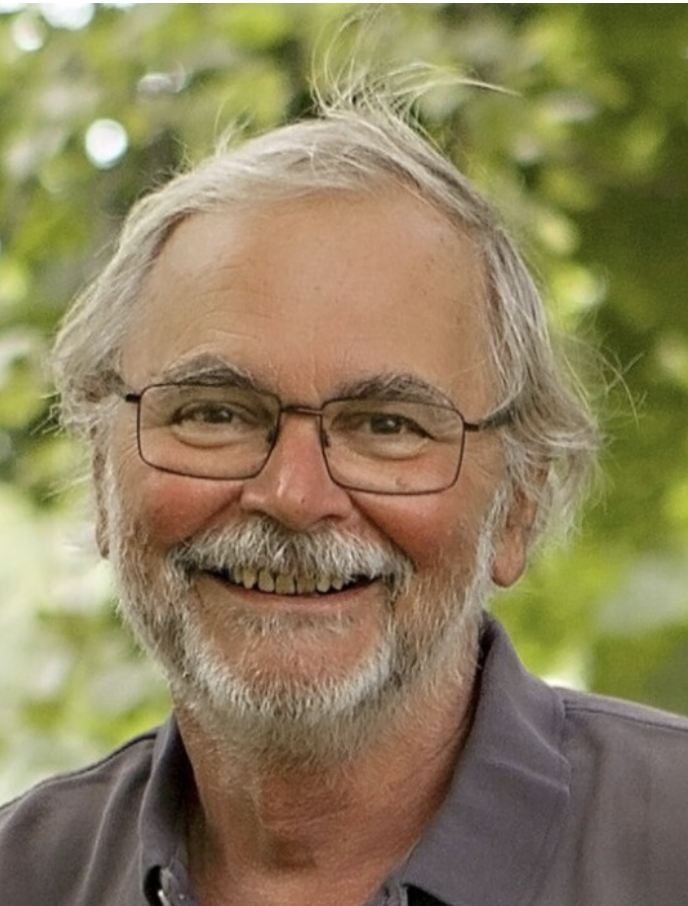
It is with deep sadness that we reflect on the passing of our colleague and friend, Paul Cabilio, who died peacefully on July 20, 2026, at the Queen Elizabeth Hospital in Charlottetown, Prince Edward Island, at the age of 81, following a brief illness. He is survived by his wife of 57 years, Juta (née Oder); their children Adrian Cabilio (Elizabeth Bobrow) and Nora Cabilio (Jonathan Leslie), as well as five grandchildren.
Paul was born in Gravina in Puglia, near Bari, Italy, on November 29, 1944, to Marco Cabilio and Yolanda Bettega. He was the elder of two boys. His family emigrated to Canada in August 1955 and settled in Montréal, Quebec. He attended McGill University, where he studied mathematics and statistics (BSc, 1966; MSc, 1969) and met his future wife. He worked as a statistician for the Geological Survey of Canada in Ottawa (1968–1969) before completing his education at Columbia University, where he earned his PhD in 1973 under the supervision of Herbert Robbins.
Upon graduation, Paul joined the Department of Mathematics at Acadia University, where he was promoted to the rank of associate professor in 1978 and professor in 1985. He was acting head of his department in 1984–1985, and head of the renamed Department of Mathematics and Statistics for three terms (1988–1994, 2002–2003, 2004–2006). In parallel, Paul was a member of the university senate (1978–1981, 1983–1985, 1998–2001, 2003–2006) and was very active in the Acadia University Faculty Association, serving notably as secretary (1977–1978), chief negotiator for the 2nd Collective Agreement (1978–1979), and president (1980–1981). Finally, he was acting dean of the Faculty of Pure and Applied Science in 2003–2004. Paul retired in 2007 and was professor emeritus to the end of his life.
Under Paul’s leadership, his department experienced remarkable growth and innovation, earning a national reputation for excellence in undergraduate education in mathematics and statistics. At the same time, he helped build a statistics group whose influence and achievements far exceeded its size. When Paul arrived in 1973, the department offered only two statistics courses. Over the years, he oversaw the development of a comprehensive undergraduate curriculum comprising 14 statistics courses, including three streams of introductory probability and statistics, and eight senior courses that have qualified for A.Stat. accreditation since 2008. A strong advocate for sound statistical practice across the sciences, he persuaded a wide range of academic units at Acadia to require their students to complete a two-term sequence of service courses taught by statistics faculty. In 1990, Paul further strengthened the university’s statistical infrastructure by establishing Acadia’s Statistical Consulting Centre.
An exceptional teacher, supervisor, and mentor, Paul touched many lives through his kindness, wisdom, and unwavering generosity. Deeply committed to the success of his students, he devoted considerable time and energy to supporting their academic and professional development, creating opportunities both inside and outside the classroom that helped them build the knowledge, confidence, and skills needed to flourish as statisticians. By fostering intellectual curiosity, critical thinking, and the exploration of new ideas, he challenged students to achieve their full potential while ensuring that they always felt valued, encouraged, and supported.
In addition to being an accomplished educator, Paul was a very meticulous researcher, who made many insightful methodological and applied contributions to the statistical sciences. He was notably known for his theoretical work on rank-correlation methods in the presence of ties or incomplete data from various experimental designs. Several of his papers on this topic appeared in the Canadian Journal of Statistics, the Annals of Statistics, and the Journal of the American Statistical Association, among others. He also wrote several articles of an applied or pedagogical nature.
Paul’s main collaborator in research was Mayer Alvo, a kindred spirit whom he had initially met as an undergraduate student at McGill, and with whom he had a fruitful collaboration and friendship throughout his life. Three of Paul’s sabbatical leaves were devoted to their collaboration, one at Technion (1979–1980), and two at the University of Ottawa (1994–1995, 2001). His other sabbatical was taken at the Sapienza Università di Roma (1986–1987). Mayer has written a very touching tribute to Paul which is published alongside with this article.
Within the Statistical Society of Canada (SSC), Paul was widely respected for his dedication, conscientiousness, and commitment to service. Over the years, he assumed numerous leadership roles, including chair of the local arrangements committee for the 1993 annual meeting at Acadia, program secretary and chair of the program committee (1996–2002), executive secretary of the SSC (2006–2009), and elected member of the SSC board of directors for three terms (1994–1996, 1996–1998, 2003–2005). His many years of devoted service were recognized with the SSC Distinguished Service Award in 2010.
Paul continued to make invaluable contributions to the SSC when, in 2014, implementation of the Canadian Not-for-profit Corporations Act required extensive legal work and a comprehensive revision of the Society’s bylaws. His meticulous attention to detail, deep knowledge of the SSC governance, and appreciation of its institutional history helped guide this complex transition smoothly and successfully to completion.
Beyond statistics, Paul enjoyed hiking and wilderness camping, including a family tradition of canoe trips into the backcountry of Kejimkujik National Park. He was also an adventurous traveller, an excellent cook and an avid gardener who owned a greenhouse in which he grew exotic orchids, among others.
Paul was a brilliant man, a model of integrity, dedication, and professionalism. He will continue to be admired not only for his achievements but also for his collegial spirit, generosity, and quiet but infectious sense of humour. To colleagues, students, and friends alike, he was a trusted mentor, valued collaborator, and loyal companion. He enriched the lives of countless individuals at Acadia, within the SSC, and throughout the broader statistical community. His absence will be deeply felt, and his legacy will endure through the many people and institutions he helped shape.
Hugh Chipman, Acadia University
Christian Genest, McGill University