Over the past few months, there has been a great deal of activity across the Statistical Society of Canada (SSC) as we move towards our annual meeting this summer. Many members, volunteers, and office staff have been working behind the scenes on a wide range of initiatives, from planning meetings and workshops to advancing Society operations and publications. I would like to take this opportunity to highlight a few of these developments and to thank those whose efforts continue to keep the SSC thriving.
First, I would like to begin by extending my sincere thanks to Jack Gambino, who will be stepping down as executive director on March 31 after 3 years of dedicated service to the SSC. Jack generously agreed to extend his term beyond the end of 2025 to ensure a smooth transition while we searched for his successor.
Over the past 3 years, Jack has played a key role in modernizing the Society’s operations. Under his leadership, SSC has transitioned from reliance on physical storage and office space towards a more contemporary model centred on digitization and a virtual office structure. He introduced online systems for forms and submissions that have improved reporting, reduced processing time, and made it easier for members and stakeholders to interact with the Society. Jack also strengthened internal governance by reorganizing operational records, updating the SSC operations manual, collaborating on revised travel and business expense policies, and proposing improvements to the membership renewal structure. Perhaps just as importantly, he helped build a strong and collaborative office team, clarifying HR processes and introducing more efficient tools and workflows that have improved how the office operates. I would very much like to thank Jack for his outstanding work in this role.
I am also very pleased to report that Christian Léger has agreed to take on the role of executive director beginning April 1, 2026, with a term running through December 31, 2028. As many of you will be aware, Christian has a highly impressive record of service to the SSC, including serving as president in 2012–13, and indeed received the SSC’s Distinguished Service Award in 2009. I am, thus, extremely grateful for Christian for stepping into this important role and feel highly confident that we are in safe hands!
Both as president and as a member of the office committee, much of my time in recent months has been devoted to issues related to office restructuring and the decommissioning of the physical office, with the goal of improving the long-term sustainability of the SSC. I would like to thank everyone involved in this work, particularly Jack Gambino and Larysa Valachko, for their dedication and careful attention to these important changes.
Preparations for the 2026 annual meeting at McMaster University continue to move forward very well. Seven workshops covering a diverse range of topics are being planned. I would like to extend my ongoing thanks to Xin Gao (meeting coordinator), Johanna Nešlehová (scientific program chair), and Angelo Canty and Katherine Davies (local arrangements cochairs) for their continued hard work. The Case Study Competition will again feature two exciting problems, one on the classification of Parkinson’s disease versus atypical parkinsonism using data from the Canadian Open Parkinson Network, and one on the use of clustering methods for cardiovascular risk prediction in type 2 diabetes using ECG and electronic health record data. We have already had a large number of registrations for the annual meeting, so it is looking like this will be a large meeting this year. For those of you who have not yet registered, and want to be guaranteed a banquet ticket, I would recommend registering soon!
I would also like to thank the organizing committee for this year’s CSSC, cochaired by Mili Cortez and Jasper Zhang, for their hard work and dedication in preparing what promises to be a rewarding and engaging event for our student community. This year the keynote address is to be given by Dr. Grace Yi and a workshop by Dr. Kuan Liu.
I would also like to acknowledge the ongoing work of the Society’s accreditation committee and accreditation services committee. Under the leadership of John Koval and Peter Macdonald, respectively, these committees have been putting in significant effort to strengthen and streamline the Society’s accreditation processes and services. Their work spans a wide range of activities, including reviewing accreditation applications, maintaining and improving accreditation documentation and course approvals, supporting mentorship for new A.Stat. members, organizing professional development opportunities, and expanding networking and engagement opportunities for accredited members. The continued dedication of these committees plays an essential role in supporting the professional recognition of statisticians and ensuring that SSC accreditation and related services operate smoothly and effectively.
I am also pleased to report that the new publishing contract between the Canadian Journal of Statistics (CJS ) and Wiley has been signed. I would like to thank Rhonda Rosychuk and the members of the ad hoc CJS publishing committee for their extensive work on this important effort. I would also like to thank CJS editor in chief, Alexandra Schmidt, and editor of “Applications and Case Studies,” Jinko Graham, for their contributions over the past year. The recently introduced “Applications and Case Studies” section is proving to be a great success and is already attracting many high-quality and interesting submissions.
I would also like to thank Adam Kashlak for agreeing to remain on for another term as editor of Liaison. Editing a publication such as Liaison requires a considerable amount of time, care, and coordination, and we are very grateful for Adam’s continued dedication to ensuring that the newsletter remains engaging and informative for our members.
Our partnership with Instats continues to flourish, with recent workshops including “Causal AI for Real-World Data,” organized through the SSC accreditation services committee, and “Advanced Data Visualizations in R,” offered by the Quantitative Life Sciences—McGill Initiative in Computational Medicine. As a reminder, SSC members receive a 30% discount on all Instats live and on-demand seminars, and many of our workshops and webinars are offered for free!
Finally, I do want to remind you to take a look at the slate of candidates we have standing in the SSC elections, which can be found in the February 2026 issue of Liaison on the SSC website. The elections will open throughout April, so please do remember to vote. Thanks for all who have agreed to stand for election, and, of course, the election committee for helping ensure we have such a highly talented pool of candidates to choose from and that the whole process runs smoothly.
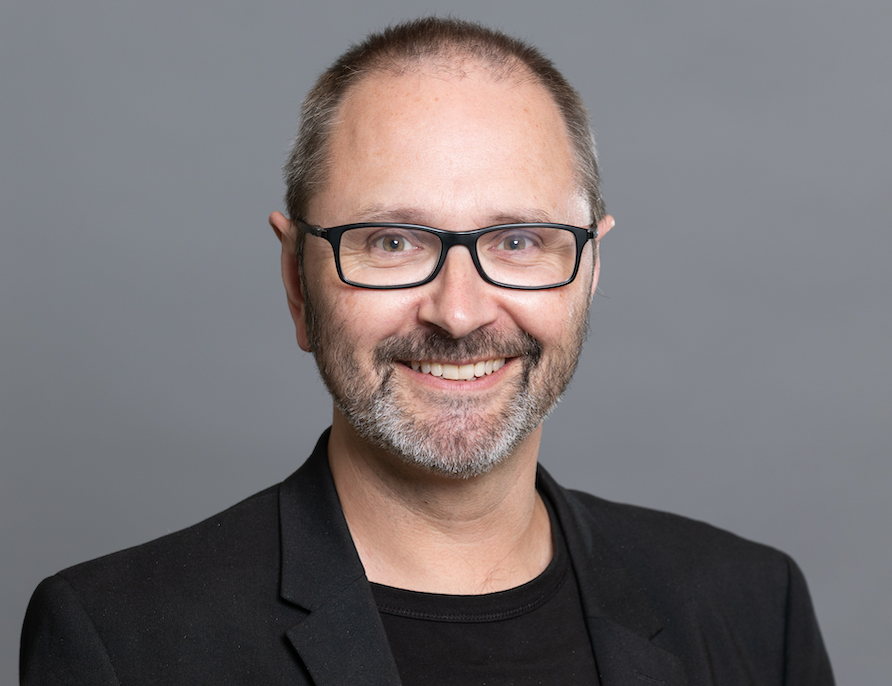
Rob Deardon, University of Calgary